
Introduction
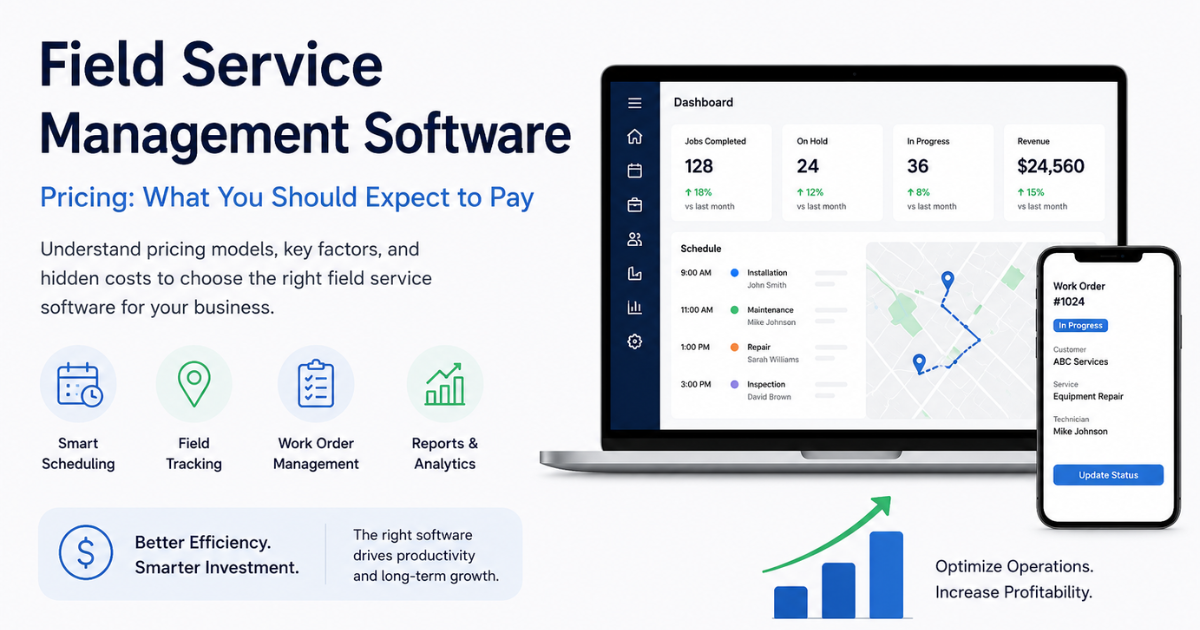
Field service solutions have become essential for modern service businesses that want to improve scheduling, efficiency, and customer satisfaction. Understanding pricing helps companies choose the right platform without overspending. Costs vary widely depending on features, users, and deployment type.
What Affects Pricing
Several factors influence the cost of field service solutions. The number of users is one of the biggest drivers, as most platforms charge per technician or dispatcher. Advanced tools like GPS tracking, automation, and AI scheduling also increase pricing. Industry-specific platforms for HVAC, plumbing, or maintenance services may include customized features that raise costs further. Cloud-based systems are usually more flexible and scalable compared to traditional installations.
Common Pricing Models
Most platforms follow a subscription-based model. Basic plans are usually affordable for small teams, while advanced enterprise plans include full automation and analytics. Some providers also use pay-per-user or pay-per-job models. Larger organizations often prefer enterprise licensing for better control and scalability. These models help businesses choose based on their operational needs rather than just budget.
Hidden Costs to Consider
Beyond monthly pricing, there can be additional expenses. Setup fees, training, integrations, and customization can significantly increase total cost. Premium support or extra storage may also be charged separately. Businesses should carefully review what is included in each plan to avoid unexpected expenses.
Choosing the Right Solution
Selecting the right platform is not only about price. The best solution should improve productivity, reduce downtime, and streamline field operations. It should also scale as your business grows and integrate easily with existing tools. Comparing features and long-term value is more important than choosing the cheapest option.
Conclusion
Understanding pricing helps businesses make smarter decisions when investing in field service solutions. By evaluating features, hidden costs, and pricing models, companies can choose a system that delivers strong value and long-term efficiency without overspending.